Municipal wastewater discharge fees have become one of the most volatile operating expenses for North American pharmaceutical manufacturers. As local districts tighten environmental regulations and upgrade aging infrastructure to meet stricter EPA standards, facilities now face punitive surcharges when waste streams exceed baseline pollutant limits.
Spiral Water Technologies engineers high-solids filtration systems designed specifically to mitigate these financial risks. By automating primary treatment at the source, our systems help pharmaceutical facilities maintain continuous regulatory compliance while protecting their bottom line.
Learn more about TSS management, high solids water filter units, and wastewater discharge.

Why Municipal Service Charges for Wastewater Disposal Are Skyrocketing
Municipalities are raising rates for wastewater disposal to offset the costs of aging infrastructure and stricter EPA standards. Public treatment plants are particularly ill-equipped to handle pharmaceutical effluent, which contains complex organic compounds, trace APIs, and solvent residues that require significantly more intensive processing than standard industrial waste.
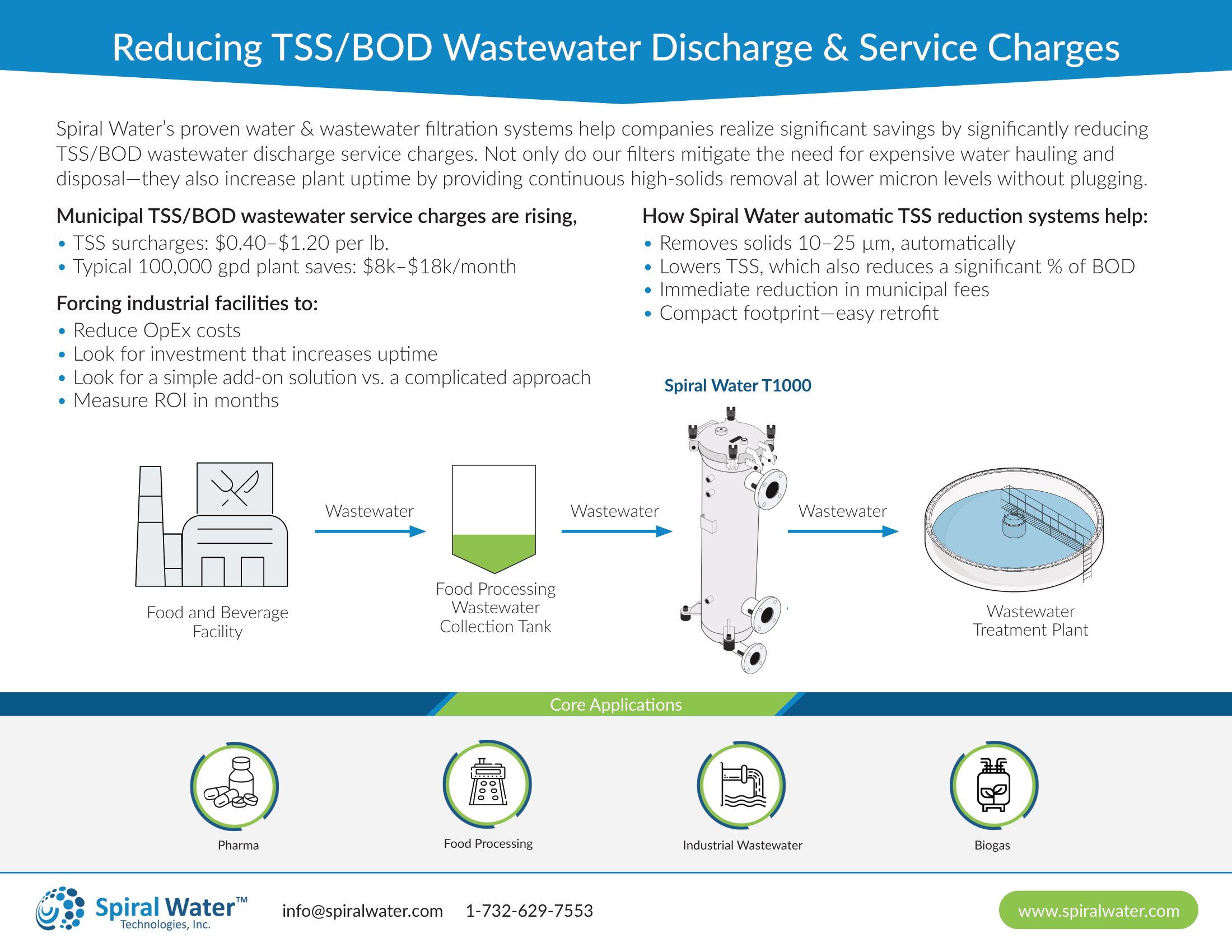
Consequently, many jurisdictions now charge per pound of pollutant rather than just by volume – and pharmaceutical discharge compliance surcharges typically run $0.60–$1.80 per pound, one of the highest rates across any industrial sector.
Facilities that previously managed predictable annual discharge budgets now face monthly surcharge bills of $12,000 to $25,000. This shift makes efficient wastewater discharge a priority for operational sustainability. Effective TSS management is no longer a luxury; it is a financial necessity to avoid these escalating costs.

Identifying the Source: High TSS and BOD in Your Waste Stream
Pharmaceutical wastewater is fundamentally different from general industrial effluent. TSS in pharma facilities typically originates from equipment washdowns, CIP (clean-in-place) system flushes, granulation and coating operations, and filter cake disposal. BOD load tracks the organic content of excipients, fermentation byproducts, and solvent carryover.
The specialized nature of these streams means standard primary treatment methods – which remove only 40% of solids on average – leave facilities highly exposed to surcharge triggers. Even a single large-batch cleaning cycle discharged without adequate treatment can spike monthly averages if a municipal sample occurs the same day. For pharmaceutical plants where compliance is non-negotiable, this unpredictability is unacceptable.
Moving Beyond Primary Treatment: The Role of Automatic Solids Removal
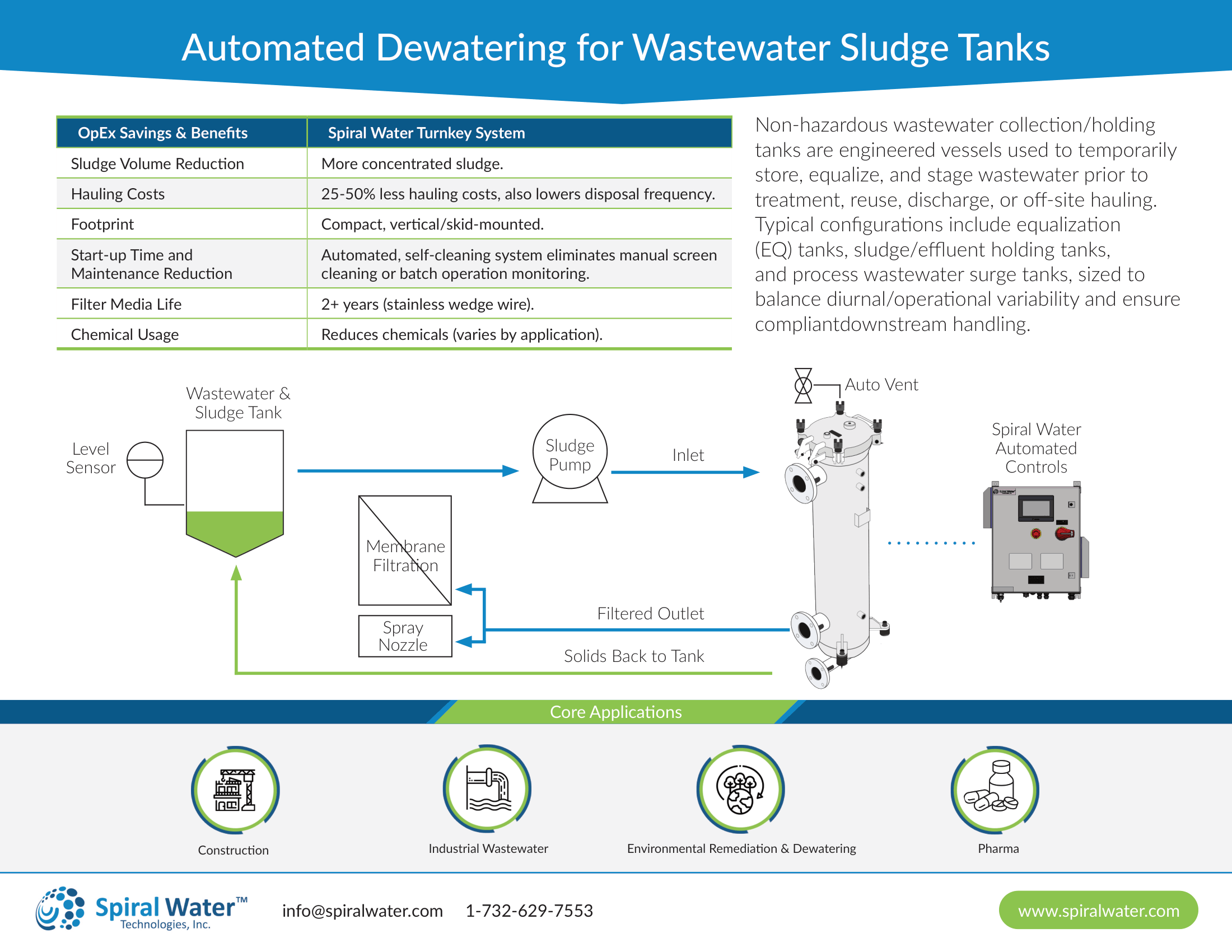
Standard backwash filters regularly fail when TSS levels exceed 500 ppm, a threshold that pharmaceutical operations can breach during routine production. Spiral Water’s high-solids filtration systems handle concentrations above 5,000 ppm through continuous mechanical cleaning, targeting particles in the 10–25 µm range that are characteristic of pharma waste streams. These systems prevent filter fouling during upset conditions and allow for up to 99% process water recovery.
On-Site Pre-Treatment vs. Off-Site Water Hauling
Facilities that integrate automatic solids removal see measurable, immediate improvements across key compliance metrics:
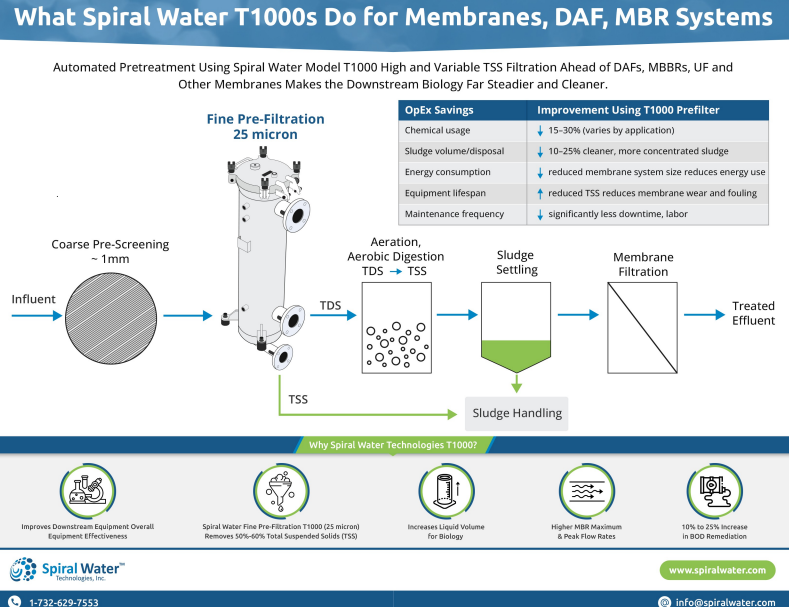
- Reduced TSS levels. Automated systems consistently lower total suspended solids by 50% to 60%, preventing downstream clogging.
- Stabilized BOD metrics. Mechanical filtration removes the particulate-bound organic load, reducing BOD by up to 48%.
- Lowered discharge volumes. Concentrating solids onsite minimizes the total volume of liquid sent to the municipal sewer.
Real-World ROI: Pharmaceutical Facilities Cutting Surcharges and Staying Compliant
Most Spiral Water systems pay for themselves in under 12 months, with many facilities seeing full payback inside 6 months, depending on their surcharge rates and discharge volumes.
One mid-sized pharmaceutical manufacturer neutralized its monthly surcharge burden after modernizing its primary treatment infrastructure. Following installation of an automated filtration system, discharge levels dropped consistently below municipal surcharge thresholds. Daily penalty fees were eliminated, and the facility achieved a full ROI within months.
In another case, a contract pharmaceutical plant eliminated its reliance on expensive waste hauling services by shifting to on-site treatment for high-strength wash effluent. High-solids filtration now provides continuous removal to keep discharge quality stable – and because erratic worst-case samples no longer influence the billing cycle, the facility’s wastewater costs have become predictable and manageable.
Turning Wastewater into a Managed Asset
Pharmaceutical manufacturers operate in an environment where regulatory compliance is not optional, and where the cost of non-compliance goes beyond fines. Municipal surcharge rates will continue to rise as national standards tighten and infrastructure costs climb. Reducing discharge fees requires treating water at the source rather than paying for its disposal downstream.
For pharmaceutical facilities, investing in modern TSS management locks in long-term savings before the next rate hike and protects the compliance record that operations depend on. Spiral Water Technologies provides the automatic, high-solids filtration infrastructure required to control these volatile utility expenses. Contact our team today to discuss how we can optimize your water treatment process.